Embers & Coal — A New Framework for Life Transitions
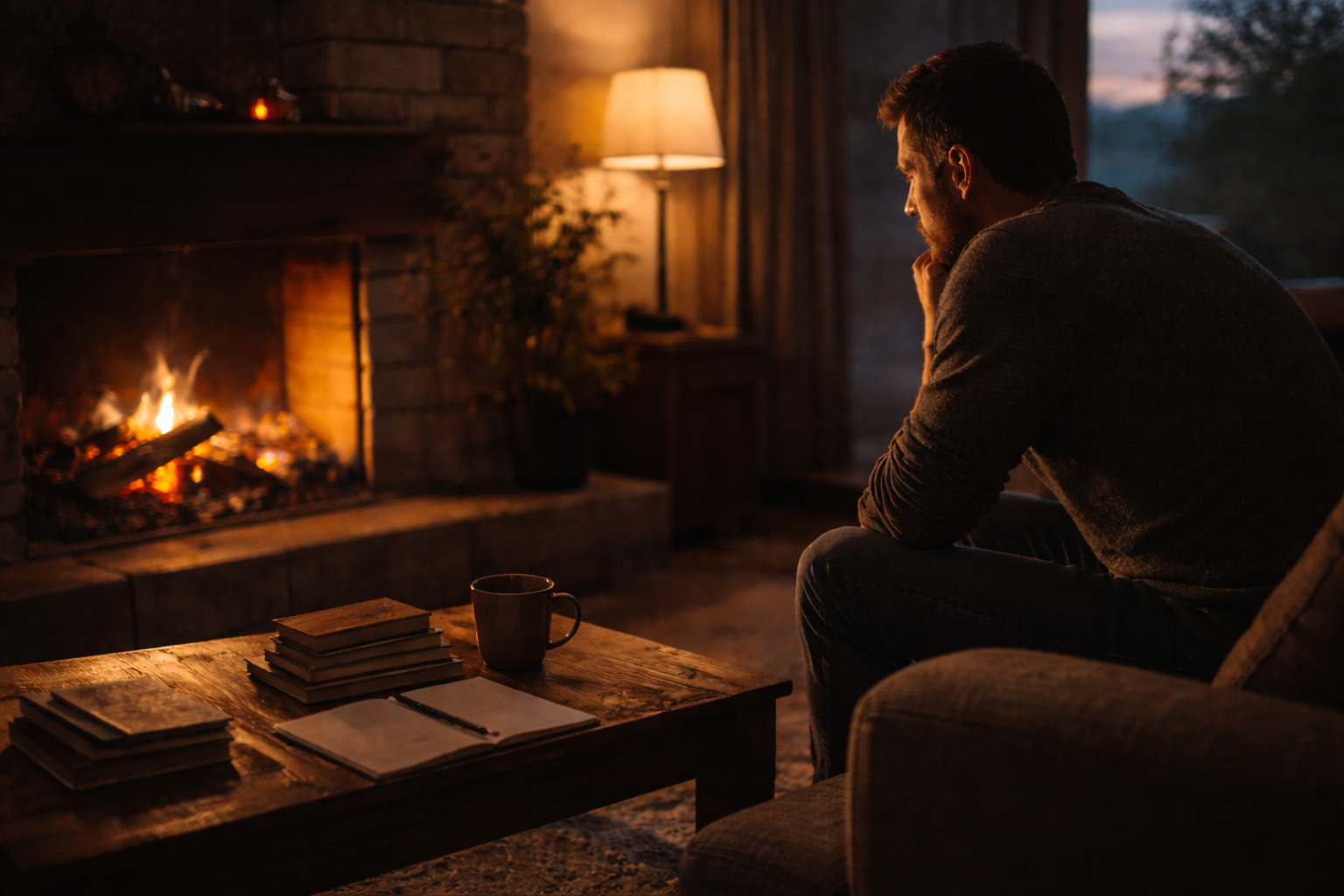
Contemplating life transitions
A Quiet Fire That Never Fully Goes Out
There’s a particular hour on the Sunshine Coast when the sun dips just below the horizon but the warmth still sits against your skin — not hot, not cool, just persistent. It’s the kind of warmth you notice if you slow down enough to feel it. That warmth is what embers and coal feel like inside human experience. What remains once the blaze has gone — still warm, still active, still shaping what comes next.
Some moments in life don’t hit like a storm or a rupture. They are slow tectonic shifts: burnout that creeps up over years, significant loss that doesn’t leave in a single wave, or inevitable changes in roles, identity, and capacity. These are the kinds of shifts that leave us changed in ways that aren’t immediately obvious — but the map of who we are is quietly redrawn. In psychological experience, what remains after change isn’t nothing: it’s embers and coal — relics of fire still radiating influence inwardly and outwardly.
Philosophically, embers are not remnants of failure. They are what’s left after transformation. They are not cold ashes. They are the source of potential warmth, reflection, identity, and creative recombination. Even when the visible flame is gone, embers and coal continue to shape the terrain.
For many on the Sunshine Coast, navigating life’s thresholds can look deceptively idyllic — sunshine, surf, community. Yet it doesn’t inoculate people from prolonged stress, shifting expectations, or life changes that feel permanent and bewildering. The reality is mental health struggles affect a significant portion of Australians at some point in life, whether or not those experiences meet diagnostic criteria — with many responding to prolonged stress, change, or overwhelm rather than isolated clinical events.